Source ce rohs ultrasonic transducer driver for Cleaning, Welding, and Sensors
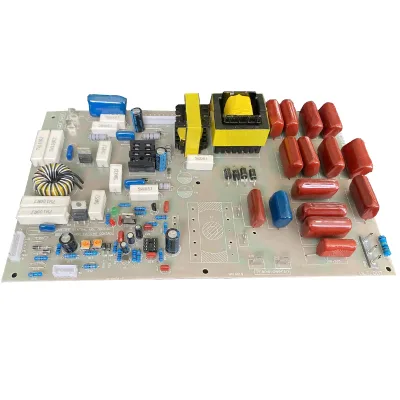
Compare 30 verified listings for ce rohs ultrasonic transducer driver solutions. Buyers can review power ranges from 100W to 4200W, frequencies between 15kHz and 200kHz, and various probe types for industrial cleaning, welding, and sensing applications.
Key considerations
Products List



Comprehensive Sourcing Guide
Strategic Sourcing Guide for CE RoHS Ultrasonic Transducer Drivers
Navigating the global marketplace for ultrasonic transducer driver circuits requires a disciplined approach that balances technical precision with rigorous compliance verification. The core keyword "CE RoHS ultrasonic transducer driver" signals a specific intersection of regulatory adherence and functional capability. Buyers must understand that while the terms CE and RoHS represent critical market access requirements, the actual performance of these drivers varies significantly based on frequency, power output, and application context. This guide synthesizes observed market data and technical attributes to provide a framework for evaluating suppliers and products without relying on unverified claims or external assumptions.
Technical Specification Analysis and Frequency Variability
The technical landscape of ultrasonic transducer drivers is defined by a wide spectrum of frequencies and power outputs, which directly dictate the suitability of a unit for specific industrial or medical applications. Observed product data reveals a distinct segmentation in the market. Some units operate within the 20-200kHz range, catering to general cleaning or welding applications, while others are specialized for high-frequency tasks at 33kHz or 40kHz. For instance, specific models are documented with a power rating of 300W at 28kHz, while others target lower frequencies like 15kHz with significantly higher power outputs of 4200W.
Buyers must scrutinize the power specifications carefully, as the range extends from 100W to over 4000W. A 100W unit operating at 33kHz serves a different purpose than a 1200W unit designed for multi-frequency operation. The frequency stability is equally critical; some drivers support a single fixed frequency, whereas others offer "3 Frequencies" or dual options like 28kHz or 40kHz. This variability means that a single "one-size-fits-all" driver does not exist. The selection process must begin with the specific resonant frequency required by the transducer being driven. Mismatching the driver frequency to the transducer's natural resonance can lead to inefficient energy transfer, overheating, or complete system failure.
Furthermore, the physical characteristics of the driver, such as cooling methods, play a role in long-term reliability. Air cooling is a standard feature observed in higher-power units, which helps dissipate heat generated during continuous operation. In contrast, lower-power units may rely on passive cooling. The output signal type is another technical differentiator, with digital types being available for integration into automated systems requiring precise control loops.
Compliance Verification: CE and RoHS Standards
Compliance with CE and RoHS directives is non-negotiable for entering the European market and many other global jurisdictions. However, the presence of these certifications on a product listing must be treated as an observation rather than an automatic guarantee of universal compliance for every unit in a supplier's catalog. The supplied data confirms that CE certification and RoHS compliance are attributes associated with specific ultrasonic driver products.
Buyers should verify that the CE marking corresponds to the specific product model and that the documentation provided by the supplier aligns with the relevant directives, such as the Low Voltage Directive (LVD) and Electromagnetic Compatibility (EMC) Directive. Similarly, RoHS compliance ensures that the product does not contain restricted hazardous substances above the threshold limits. It is crucial to request the Declaration of Conformity (DoC) and test reports from the supplier. These documents should explicitly list the tested models and the specific versions of the standards applied.
While some background knowledge suggests standards like ISO 9001:2015 or ISO 13485:2016, these should not be assumed to apply unless explicitly stated in the product specifications. The primary focus for this category remains on the CE and RoHS attributes. Buyers must ensure that the "CE" and "RoHS" claims are backed by valid testing from accredited laboratories. A supplier claiming compliance without providing the supporting documentation is a significant red flag. The verification process involves cross-referencing the certification numbers provided against the official databases of the issuing bodies, if available, or ensuring the supplier's quality management system includes regular third-party audits.
Cost Drivers and Pricing Structure
The pricing of ultrasonic transducer drivers is influenced by a complex array of factors, including power capacity, frequency complexity, and customization levels. The observed price range in the market spans from $1 to $3100, reflecting the vast difference between simple, low-power driver boards and robust, high-power industrial units. A 100W unit at 33kHz will naturally command a different price point than a 4200W unit operating at 15kHz.
Customization is a major cost driver. Products listed as "Customized" or with "Customization: Available" often carry a premium due to the engineering effort required to tailor the driver to specific transducer characteristics or application constraints. Conversely, "Non-Customized" or standard models may offer lower unit costs but less flexibility. The Minimum Order Quantity (MOQ) also impacts the effective cost per unit, with ranges observed from 1 to 100 units. Buyers should calculate the total cost of ownership, including the potential need for multiple units to achieve a desired power output, rather than focusing solely on the unit price.
Additionally, packaging and shipping considerations can affect the final landed cost. Some products are packed in standard cartons, while others may require specialized "Cartoon Box" packaging for protection during transit. The inclusion of the transducer in the price is another variable; some listings explicitly state "Price No Include Transducer," meaning the buyer must source the transducer separately, which adds to the overall project cost. Understanding these nuances is essential for accurate budgeting and avoiding unexpected expenses during the procurement process.
Application Scenarios and Operational Context
Ultrasonic transducer drivers serve diverse applications ranging from industrial cleaning and welding to medical imaging and non-destructive testing. The specific application dictates the required technical specifications. For example, "Large range Ultrasonic Sensor" and "High Frequency Ultrasonic Sensor" types suggest applications in detection and sensing, where sensitivity and probe type are critical. The "Direct Reflection Type" detection mode is suitable for proximity sensing, while "Angle Probe" and "Straight Probe" configurations are used in material inspection.
In cleaning applications, the frequency and power must match the viscosity and volume of the liquid medium. The "Measuring Medium: Liquid" attribute indicates suitability for liquid-based processes. High-pressure features are often required for industrial cleaning or degreasing tasks. In contrast, "Wearable" features suggest a niche application in personal care or medical devices, where size and power consumption are constrained.
The control mechanism is another factor determining the application fit. "Semi-Automatic" control systems are common in manufacturing lines where human intervention is required for setup or monitoring, while fully automatic systems integrate with larger PLCs. The "Output Signal Type: Digital Type" is particularly relevant for applications requiring data logging or integration with smart factory systems. Buyers must map their specific operational requirements against these attributes to ensure the selected driver can handle the intended workload without performance degradation.
Supplier Evaluation and Quality Assurance
Evaluating suppliers for ultrasonic transducer drivers requires a focus on transparency and technical capability. The origin of the products, often listed as "China" or specifically "Shenzhen," provides context for the manufacturing ecosystem but does not inherently guarantee quality. Buyers should prioritize suppliers who can demonstrate a robust production process, such as the "Ceramics" process noted in the specifications, which is critical for the integrity of the transducer elements.
Quality control should be a central part of the supplier evaluation. Buyers must inquire about the supplier's testing protocols for frequency stability, power output consistency, and thermal management. The "Sensitivity" attribute, ranging from "High" to "Medium," indicates the quality of the sensor integration, but this should be verified through sample testing. A supplier's ability to provide detailed product data sheets, including the "prod_model" and "prod_standard" details, is a strong indicator of professionalism.
Furthermore, the "IP Rating" and "Cooling Way" specifications should be validated against the intended operating environment. If a driver is specified for a dusty or wet environment, the IP rating must be sufficient to prevent ingress. The "Production Process" should be consistent with industry best practices to ensure longevity. Buyers should request samples for pre-shipment testing to verify that the actual product matches the claimed specifications, particularly regarding the "Condition: New" status and the absence of defects.
Long-Term Procurement and Supply Chain Resilience
Sourcing ultrasonic transducer drivers is not a one-time transaction but a long-term partnership that requires consideration of supply chain resilience. The "Lead Time" and "MOQ" are critical factors in maintaining production continuity. With an observed MOQ range of 1 to 100, buyers can start with small batches to validate performance before committing to larger orders. However, for high-volume production, negotiating a lower MOQ or securing a dedicated production line may be necessary.
The "Customized" nature of some products implies a longer lead time and a more complex supply chain. Buyers should assess the supplier's capacity to handle custom orders without compromising quality or delivery schedules. The "prod_packing" and "prod_standard" details also play a role in logistics; standardized packaging facilitates easier handling and storage, while custom packaging may require special handling procedures.
Finally, buyers should consider the availability of spare parts and technical support. Ultrasonic drivers are subject to wear and tear, and the ability to replace components or upgrade firmware is essential for long-term operation. A supplier with a strong track record in the "Shenzhen" manufacturing hub may offer better access to technical expertise and rapid response times. By focusing on these long-term factors, buyers can build a resilient supply chain that supports their operational goals and minimizes the risk of disruption.
Summary of Key Product Attributes
To assist in the final selection process, the following table summarizes the key attributes observed in the market for ultrasonic transducer drivers. This comparison highlights the diversity of options available and the specific parameters buyers should prioritize based on their application needs.
| Attribute Category | Observed Values | Relevance to Selection |
|---|---|---|
| Power Output | 100W, 300W, 1200W, 4200W, 50-150W | Determines suitability for cleaning, welding, or sensing tasks. |
| Frequency | 15kHz, 28kHz, 33kHz, 40kHz, 3 Frequencies | Must match transducer resonance for efficiency. |
| Certification | CE, RoHS | Mandatory for EU market entry and safety compliance. |
| Customization | Customized, Non-Customized, Available | Affects cost, lead time, and fit for specific applications. |
| Probe Type | Angle Probe, Straight Probe | Critical for non-destructive testing and sensing accuracy. |
| Cooling Method | Air Cooling | Essential for high-power continuous operation. |
| Origin | China, Shenzhen | Indicates manufacturing hub and potential logistics factors. |
| Condition | New | Ensures product integrity and warranty eligibility. |
By adhering to these guidelines and focusing on verified data, buyers can navigate the complex landscape of ultrasonic transducer drivers with confidence, ensuring that their procurement decisions are grounded in technical reality and regulatory compliance.
FAQs
What certifications do these drivers have?
The products listed carry CE and RoHS certifications. These attributes confirm compliance with European safety and hazardous substance restrictions, though buyers must verify specific model documentation.
How is the power output specified?
Power ratings vary significantly from 100W to 4200W across different models. Specific units include 300W at 28kHz and 1200W with multi-frequency options, requiring careful selection for the application.
Which frequencies are available for these drivers?
Available frequencies range from 15kHz to 40kHz, with some models supporting 28kHz or 33kHz. Certain units offer three distinct frequencies or dual options like 28kHz and 40kHz for versatility.
Can I find customized ultrasonic driver options?
Yes, some listings explicitly state that customization is available or the product is customized. Conversely, non-customized standard models exist, allowing buyers to choose based on their specific engineering needs.
Where are these products manufactured?
The products originate from China, with specific mentions of Shenzhen as a production hub. This location context helps buyers understand the manufacturing ecosystem and potential supply chain logistics.
What is the minimum order quantity?
The observed minimum order quantity ranges from 1 to 100 units. This flexibility allows buyers to start with small batches for testing before committing to larger industrial orders.